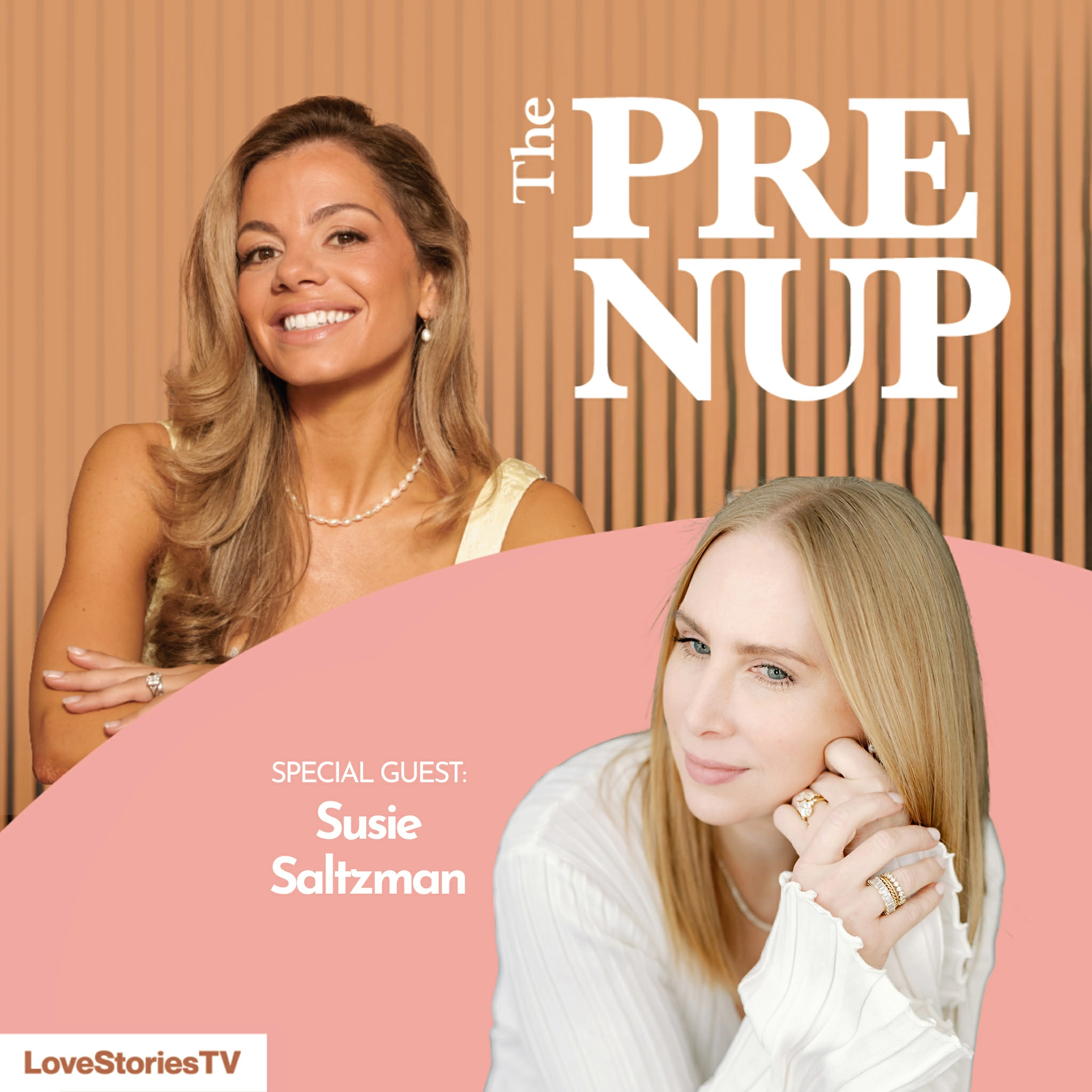
Engagement Ring Secrets Your Jeweler Won't Tell You: Expert Tips From Celebrity Designer Susie Saltzman
Planning your dream engagement ring can feel overwhelming with so many decisions to make and conflicting advice everywhere. On this week's episode of The Pre Nup, I sat down with celebrity jewelry designer Susie Saltzman to uncover the engagement ring secrets that most jewelers won't share with you. Susie has designed rings for countless couples and is the go-to expert for anyone seeking that perfect, personalized engagement ring.
From understanding which of the 4 C's actually matter most for different diamond shapes to navigating the lab grown versus natural diamond debate, Susie shared insider knowledge that will save you thousands and help you make the smartest choices for your dream ring. Whether you're a "pre-engaged" bride-to-be or actively shopping for rings, these expert insights will completely change how you approach one of the most important jewelry purchases of your life.
Understanding the 4 C's: Why Diamond Shape Changes Everything
Most people know about the 4 C's (carat, color, clarity, cut), but here's what jewelers don't tell you: the importance of each C varies dramatically depending on your diamond shape. This is one of the biggest engagement ring secrets that can save you serious money.
For oval diamonds, color is your top priority. Ovals show yellow undertones more than any other shape, so Susie recommends staying in the D, E, F, or maybe G color range. You can compromise slightly on clarity as long as the stone is eye-clean.
For emerald and Asscher cuts, clarity becomes crucial. These step-cut diamonds have a "hall of mirrors" effect that makes inclusions much more visible. Stick to VS2 or better for clarity, but you can go a bit lower on the color scale.
For round diamonds, you have the most flexibility. Rounds mask both color and clarity better than fancy shapes, meaning you can go down to I or even J color and find eye-clean stones with slightly lower clarity grades.
This shape-specific approach can save you 20-30% on your diamond budget by allowing you to prioritize what actually matters for your chosen shape while compromising on factors that won't be visible.
Lab Grown vs Natural Diamonds: The Real Truth About Value and Investment
The lab grown versus natural diamond debate has reached a fever pitch, and there's a lot of misinformation out there. Here's the honest truth: both are real diamonds with identical chemical and optical properties. The difference comes down to psychology, budget, and personal values.
Lab grown diamonds cost approximately 60-80% less than natural diamonds of equivalent quality. This means you can get a 2-3 carat lab grown diamond for the price of a 1 carat natural stone. They're also more environmentally sustainable since they don't require mining.
Natural diamonds appeal to those who value the billions of years it took to create them naturally. However, here's a crucial engagement ring secret: even natural diamonds aren't investments. The general rule is that you'll get back about 20% of what you paid if you ever resell, regardless of whether it's natural or lab grown.
Susie's advice? Reframe what "heirloom" means. The emotional significance and memories attached to your ring matter far more than resale value. Whether you choose lab grown or natural, focus on getting the most beautiful ring for your budget rather than treating it as a financial investment.
The Hidden Costs of Ring Anatomy That Affect Your Budget
Here's an engagement ring secret most people never consider: the anatomy of your ring affects both cost and durability. The shank (band), basket, prongs, and setting all impact your final price and how well your ring will age.
Band thickness matters more than you think. Susie never makes bands thinner than 1.5 millimeters because anything smaller becomes problematic over time. While ultra-thin bands look delicate and trendy, they're more likely to bend, warp, or catch on things.
The basket-to-shank connection affects how your wedding band will fit with your engagement ring. If you want them to sit flush, this needs to be planned from the beginning. If you don't mind a gap, you have more flexibility in your engagement ring design.
Setting style impacts diamond security. Prong settings show more of the diamond but require more maintenance. Bezel settings (a rim of metal around the stone) are more secure but can make the diamond appear smaller. Consider your lifestyle when choosing between sparkle and security.
Custom Design Process: What to Expect and How to Prepare
Many couples assume custom design is out of their budget, but it's often comparable to buying from traditional retailers while giving you exactly what you want. Here's how the process actually works:
Timeline: Plan for 2-3 months from initial consultation to finished ring. While rush jobs are possible in extreme circumstances, proper timeline allows you to make thoughtful decisions without pressure.
Process: You'll start with a phone consultation to discuss style preferences, budget, and timeline. The in-person appointment involves seeing actual diamonds, learning about quality factors, and designing your setting together. Everything is fabricated in New York with regular updates throughout.
Budget planning: Custom doesn't necessarily mean expensive. By understanding which factors matter most for your chosen style, you can allocate budget efficiently. For example, if you want a vintage-inspired cushion cut, you might spend more on an old mine cut diamond but choose a simpler setting.
Smart Shopping Strategies for Maximum Impact
Consider surface area over carat weight. Pear and oval shapes show their carat weight best, appearing larger than round diamonds of the same weight. Emerald cuts and Asschers tend to carry weight in their depth, so a 2-carat emerald might look smaller than a 1.5-carat oval.
Think beyond traditional stones. Colored gemstones like sapphires, rubies, and emeralds are having a major moment and often cost less than diamonds while offering unique personality. They're not for everyone, but if colorful stones speak to you, they can offer significant savings.
Plan your wedding band early. Decide during engagement ring design whether you want your bands to sit flush or have a gap. This affects the engagement ring's design and your wedding band options later.
Key Takeaways
• The importance of the 4 C's varies by diamond shape - prioritize color for ovals, clarity for emerald cuts, and maintain balance for rounds
• Lab grown diamonds are chemically identical to natural diamonds at 60-80% less cost, making larger stones more accessible
• Neither lab grown nor natural diamonds are good financial investments - focus on beauty and emotional value instead
• Custom design typically takes 2-3 months and often costs the same as retail while giving you exactly what you want
• Band thickness should never go below 1.5mm for durability and longevity
• Consider surface area over carat weight - pear and oval shapes appear larger than their actual weight
• Plan your wedding band during engagement ring design to ensure proper fit and style coordination
Frequently Asked Questions
What's the most important of the 4 C's for engagement rings?
It depends entirely on your diamond shape. For oval diamonds, prioritize color (D-G range) since ovals show yellow undertones more. For emerald and Asscher cuts, clarity is most important (VS2 or better) because their step-cut faceting makes inclusions visible. Round diamonds are most forgiving, allowing you to go lower on both color and clarity while maintaining beauty.
Are lab grown diamonds worth buying for engagement rings?
Lab grown diamonds are chemically and optically identical to natural diamonds at 60-80% less cost. They're worth considering if you want a larger stone, prioritize sustainability, or want to allocate more budget to the setting. However, they have minimal resale value. Choose based on personal preference rather than investment potential, as even natural diamonds typically retain only about 20% of their purchase price.
How long does it take to get a custom engagement ring made?
Most custom engagement rings take 2-3 months from initial consultation to completion. This includes time for sourcing the perfect diamond, designing the setting, and hand-fabrication. While some jewelers can rush orders in 1-2 weeks for emergencies, the standard timeline allows for thoughtful decision-making and proper quality control.
What's the minimum band thickness for an engagement ring?
Never go below 1.5 millimeters for your band thickness. While ultra-thin bands under 1.2mm look delicate, they're prone to bending, warping, and catching on objects. A 1.5mm band provides the perfect balance of delicate appearance with long-term durability and structural integrity.
Should I choose my wedding band before buying my engagement ring?
You don't need to choose your specific wedding band first, but you should decide whether you want the rings to sit flush together or have a gap between them. This decision affects your engagement ring's design, particularly the basket-to-shank connection. Planning for this during engagement ring design gives you more wedding band options later.
---
This post is based on an episode of The Pre Nup: A Wedding Planning Podcast. Follow us @the_pre_nup on Instagram and TikTok, and listen wherever you get your podcasts.